
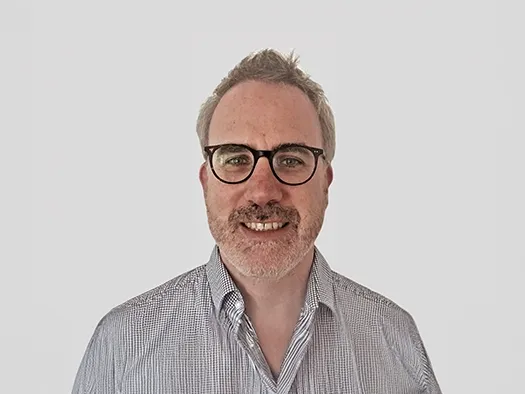
Prof. Dr. med. habil. Christian Wozny
Professorship of Neurophysiology
Phone: +49 40 361 226 43215
Send email
Biography
Christian Wozny studied medicine at the Charité in Berlin, Germany. After having completed his doctorate in Berlin, he performed research at the MRC Laboratory of Molecular Biology (MRC LMB) in Cambridge, England, and then returned to the Charité, where he finished his habilitation in 2013. Between 2015 and 2020 he was a research group leader at the Strathclyde Institute of Pharmacy and Biomedical Sciences at the University of Strathclyde in Glasgow, Scotland, initially as a “Chancellor's Research Fellow” / Lecturer (as part of a so-called “5-year tenure track fellowship ") and since 2019 as Senior Lecturer (equivalent to an associate professorship).
In October 2020, Christian Wozny was appointed Professor of Neurophysiology at the MSH Medical School Hamburg.
Teaching activities
Christian Wozny has been teaching physiology and neurobiology in both German and English since the end of his studies. He received didactic training at the Charité and the University of Strathclyde, Glasgow. Christian completed his habilitation in physiology at the Charité. During his time in Scotland he received the Postgraduate Certificate of Learning and Teaching in Higher Education and was a Fellow of the Higher Education Academy. Over the past years, he has supervised numerous bachelor, master and doctoral theses at the University of Strathclyde, Charité and the MRC Laboratory of Molecular Biology.
Research interest
Christian Wozny's research group has a great interest in studying the electrical, anatomical and molecular properties of different types of cortical and subcortical nerve cells. At the MSH, his work has centred on investigating the electrophysiological and anatomical characteristics of neurons in brain organoids using state-of-the-art techniques such as patch-clamp recordings and optogenetics.
In addition to his research activities, Christian Wozny serves on the editorial boards of several scientific journals and regularly reviews manuscripts and grant applications for journals and funding bodies.
The research carried out by his group in Great Britain was funded, among others, by the Wellcome Trust, the Royal Society and Tenovus Scotland. In 2019, he received a NARSAD Young Investigator Award for investigating the neurobiological basis of depressive disorders (P&S Fund Investigator, Brain and Behavior Research Foundation (BBRF), USA).
Publications